Pokeweed
- khilton
- Sep 5, 2025
- 3 min read
Updated: Dec 18, 2025
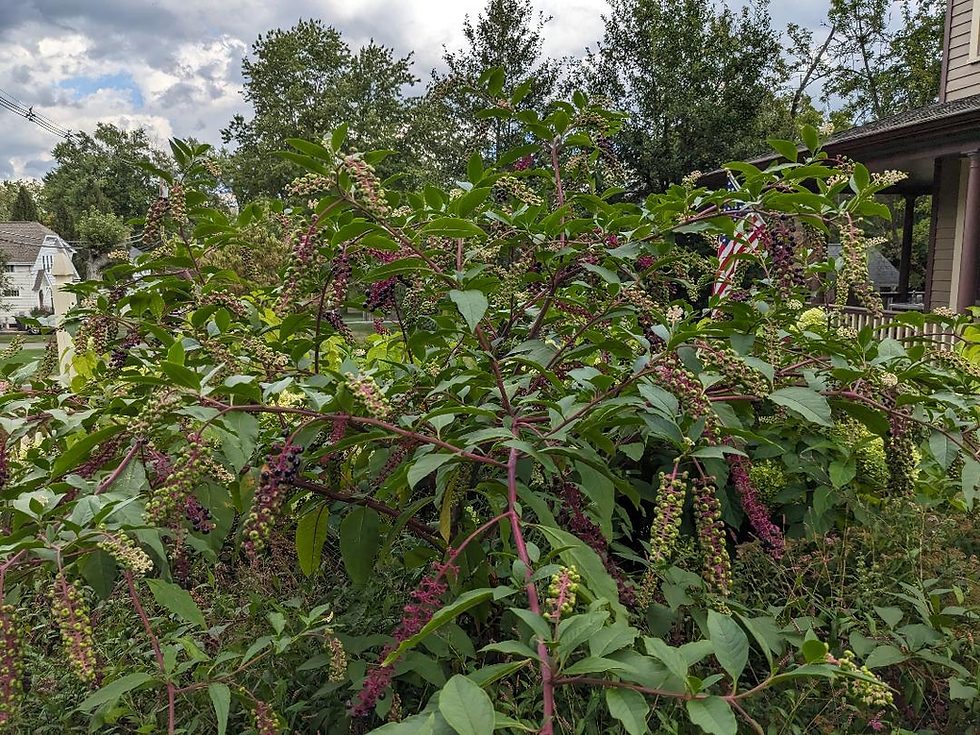
Here is a short tale of Pokeweed. Our small, close-to-the-street front yard is inhabited by Vinca ground cover, pink Spirea and white Hydrangeas. A plant I didn't recognize appeared in the Spring and we guessed it was Milkweed. Milkweed is desirable, a friend to Monarch Butterflies and welcome to remain. Eventually, we realized it was not milkweed and its identity as Pokeweed became obvious as the plant matured. Poke would receive a definite "weed" designation by the "groundskeeper" ~ husband who would have gotten right to its removal. I revealed my intention to write about Pokeweed for Applied Botany and because of that entreaty, it was allowed to proceed, gradually showing off all its shapes and colors. I considered it an amusing, 6 feet tall pet. In the prep reading for this essay, we were happy to learn that Pokeweed is important to pollinators and as a host plant for moth caterpillars. Native bees will nest in the hollow stems. It likes to grow where the ground has been disturbed. The large taproot can reach 18 inches and Pokeweed can remove heavy metals from contaminated soil, including cadmium.
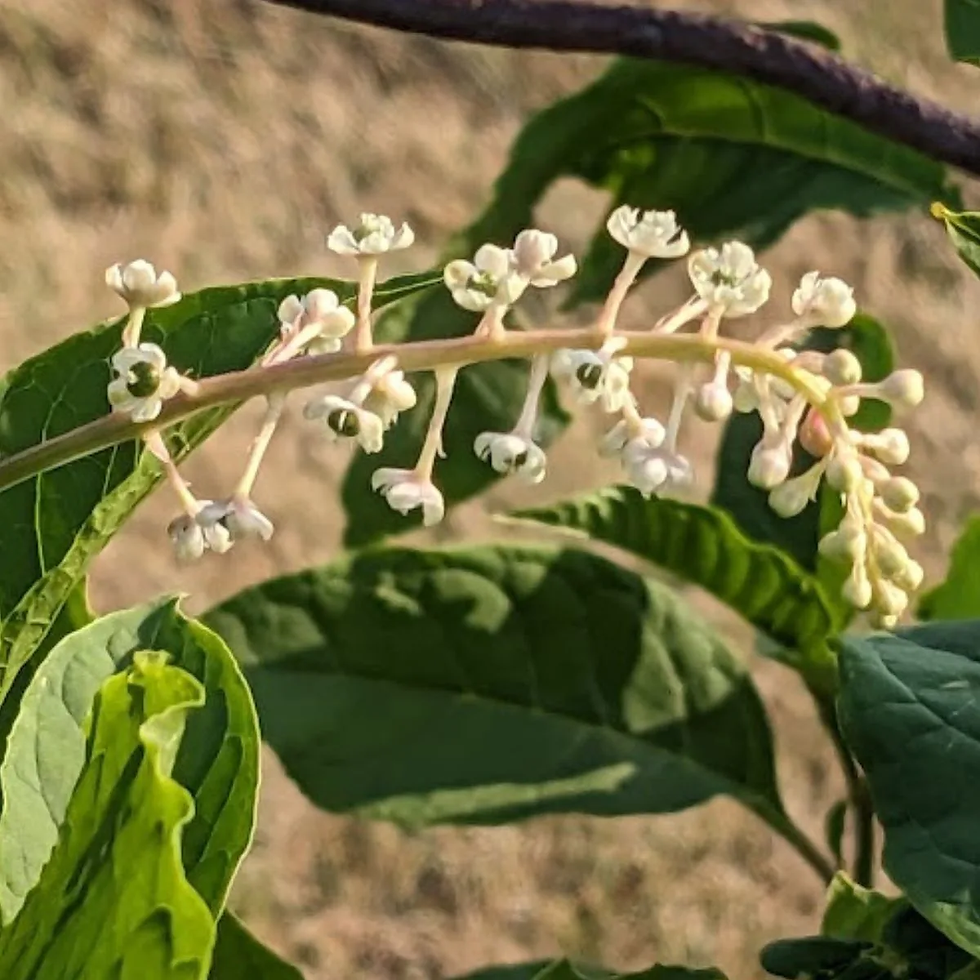
A cylindrical raceme of white Pokeweed flowers. Flowers continue to appear during summer and fall. Notice the green centers.
Phytolacca americana is a wild and wacky perennial plant, native to North and South American and East Asia. Its name comes from Greek. Phyton = plant. Lacca = red dye. In addition to its bold colors, you might like the way it artfully and spatially arranges its stems, leaves and hanging berry clusters. I wonder if Dr. Seuss ever included a drawing of it in one of his stories?
Phytolaccatoxin is present in leaves, stems, roots, blossoms, and berries and all are poisonous to most, but not all mammals. Raccoons, foxes and the Virginia Opossum can tolerate the berries. Birds eat the berries which are not affected by the toxin because the small seeds with hard outer shells remain intact in the bird's digestive tract and are eliminated whole. Mockingbirds, several species of Sparrows, Mourning Doves, Bobwhites and the Northern Cardinal eat the berries.
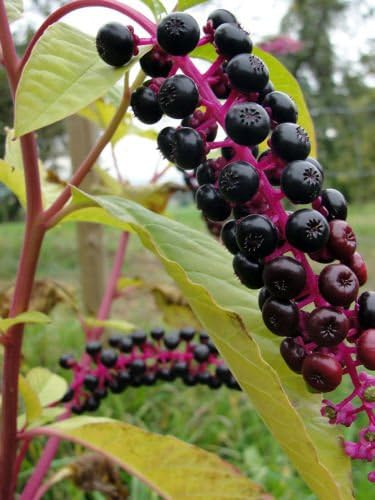
These tree-like plants can easily exceed 10 feet tall. The stems can be green, pink or fuchsia red. The flowers are white and the berries are green at first, ripening into dark purple then shiny black. The purple juice of the berries was used as a commercial dye in olden days. Using the juice as a dye agent was the reason Poke was introduced into Europe.
Pokeweed is used in folk herbal medicine preparations and as a food and while the leaves are toxic, folk wisdom would allow that they are edible after being 'properly prepared'. The root is not eaten and cannot be made edible. Poke salad, especially the newly emerged Spring leaves, is considered part of traditional southern U.S. cuisine, where it is cooked 3 times in 3 changes of boiling water to remove harmful components. Along the lines of a Warning...as exotic and beautiful as the plant is, I'm not tempted nor do I recommend anyone eat the plant.
Do you remember the Tony Joe White song, released in 1969, "Poke Salad Annie"? You can Google the lyrics and I found a version of the song performed by Elvis. Here is a link for the Elvis' version on You tube.
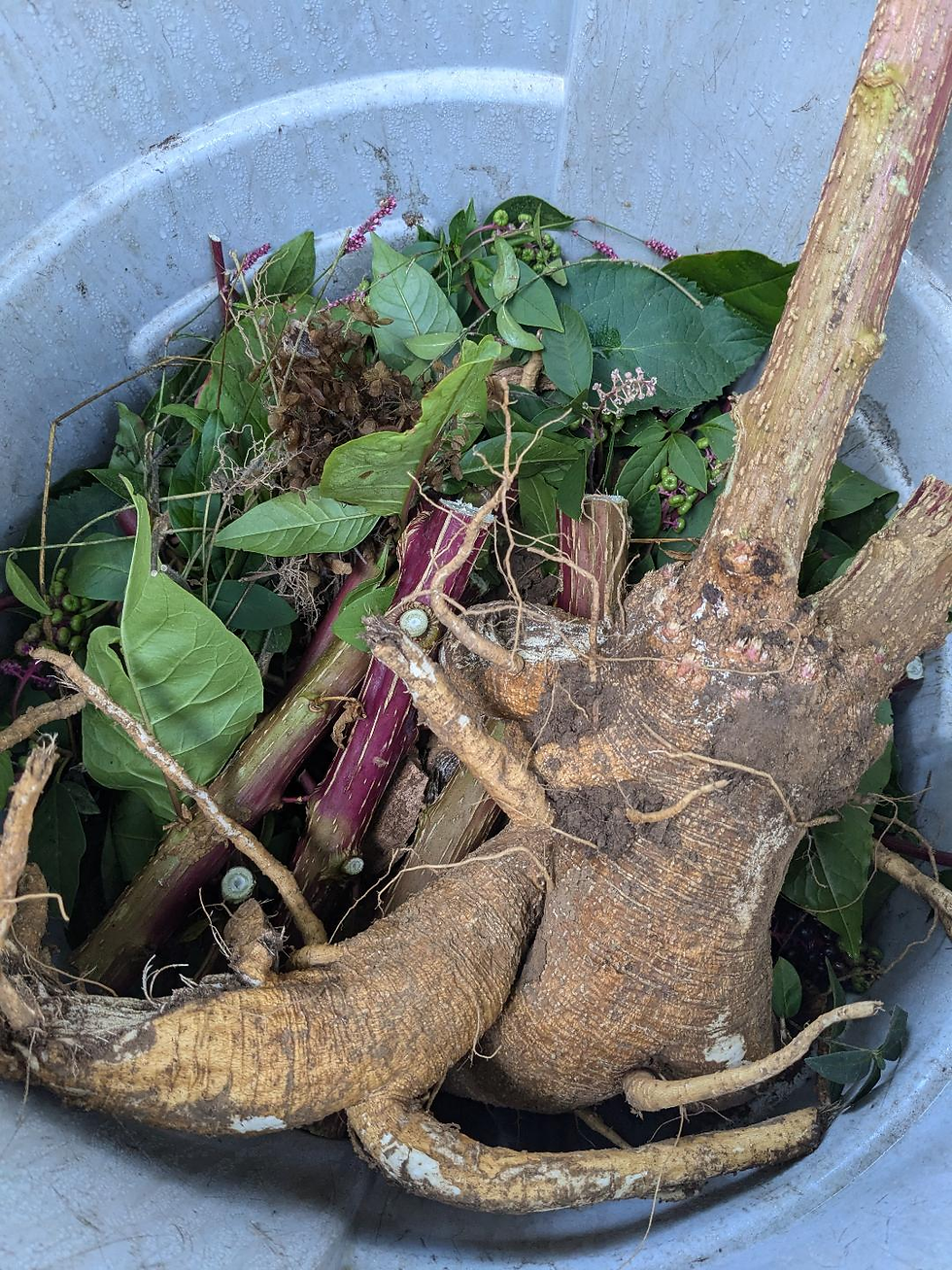
Pokeweed Root. I could no longer hold off gardener~husband from cutting down my 6-foot pet. Here is its mighty root. Isn't that amazing for one season's growth? This was cut on September 20, 2025.
Karen,
I do remember that song and never knew what it meant. Interesting story and I'm glad you got to keep your Poke plant in your yard. It's beautiful and useful for some creatures, sounds like. Since you mention it's herbal use, I thought I'd throw in it's homeopathic use. Briefly, Phytolacca was called "vegetable mercury" by one of our famous homeopathic Drs. of long, long ago. Homeopathically, it has an effect on the bones, glands and throat. I've seen it in books used for enlarged glands, tonsillitis, sore throat and much, much more...Thanks Karen. Your posts inspire me to look up the remedies and always helpful to learn materia medica🙂